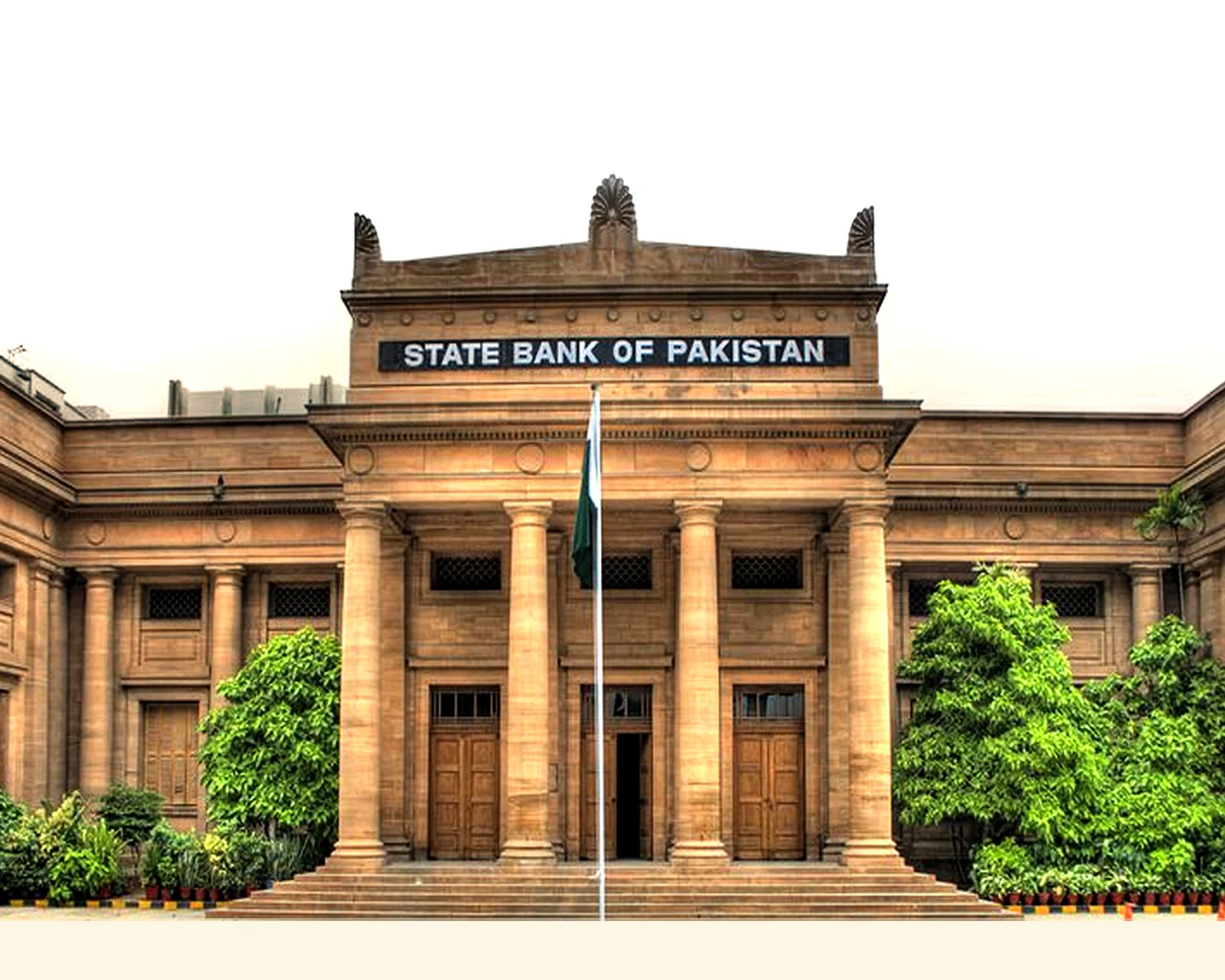
Pakistan’s central bank chose caution over commitment as it opened the new fiscal year. The State Bank of Pakistan (SBP) kept its benchmark policy rate unchanged at 11.5% at its first Monetary Policy Committee (MPC) meeting of FY2026-27, holding steady for a second consecutive meeting as easing domestic inflation continues to be offset by renewed conflict-driven risks from the Middle East.
Key Takeaways
- Decision: Policy rate held unchanged at 11.5%
- Meeting: First MPC meeting of FY2026-27, held Monday, July 27, 2026, in Karachi
- Market expectations: Matched forecasts a Topline Securities survey found 97% of respondents expected a hold, versus 3% expecting a 100bps cut
- Recent rate path: SBP unexpectedly raised the rate by 100bps on April 27, 2026, then held at 11.5% in both the June 15, 2026 and this July 27, 2026 meetings
- June 2026 inflation: 11.1% year-on-year, down from 11.7% in May; core inflation moderated to 8.4%, still elevated
- Key risk cited: Renewed US-Iran hostilities, including the re-closure of the Strait of Hormuz and Houthi threats, raising global oil price risk
- Next meeting: September 14, 2026 the third MPC meeting of the fiscal year
What SBP Actually Decided
The Monetary Policy Committee, meeting for the fifth time this calendar year and the first time in fiscal year 2026-27, decided to hold the policy rate at 11.5% a decision the central bank itself described as reflecting an improved macroeconomic outlook that nonetheless remains “susceptible to heightened risks,” particularly following the resurgence of Middle East conflict. In its statement, the SBP noted that proactive macroeconomic management combining a prudent monetary stance with sustained fiscal consolidation has helped manage the ongoing global supply shock and preserve macroeconomic stability despite a genuinely difficult external environment.
Announcing the decision at a press conference in Karachi, SBP Governor Jameel Ahmad said inflation is expected to decline further in July, with the central bank projecting CPI to settle near the upper end of its 5–7% medium-term target range by the close of the current fiscal year.
The Inflation Picture
Headline inflation has been on a genuinely volatile path over recent months. According to Governor Ahmad, inflation averaged a low 5.5% between July and February comfortably within SBP’s target range before the Middle East conflict, which began driving up petroleum and global commodity prices from early March, pushed inflation up sharply to 11.7% in May, before easing slightly to 11.1% in June. Core inflation, which strips out volatile food and energy prices, moderated to 8.4% in June but remains elevated well above the headline target range.
An independent July 2026 assessment by the Macro Policy Lab at the Pakistan Institute of Development Economics (PIDE) added a note of caution to this picture: while headline inflation has eased, urban and rural core inflation remained elevated at 8.7% and 7.9% respectively, driven largely by food, energy, transport, and administered prices categories monetary policy has limited direct ability to influence. The assessment also flagged a recent rebound in the weekly Sensitive Price Indicator (SPI) as a reason to treat the broader disinflation trend as not yet firmly established.
Why the Middle East Keeps Overriding the Case for a Cut
There was, until recently, a genuine and building case for monetary easing. Following the signing of a US-Iran Memorandum of Understanding on June 18, 2026, tensions briefly eased and international oil prices softened a shift that led market participants to start pricing in cumulative rate cuts of 100–150 basis points over the following two to three MPC meetings, according to Topline Securities.
That optimism didn’t survive contact with events on the ground. Renewed US-Iran hostilities over the following weeks including the re-closure of the Strait of Hormuz and Houthi threats to broaden the conflict reversed much of that improved sentiment, reintroducing exactly the kind of global oil price and supply chain risk that makes a rate cut harder to justify for an import-dependent economy like Pakistan’s.
The Case Analysts Made for a Hold Anyway
Even setting aside the Middle East risk specifically, analysts pointed to a genuinely mixed set of signals heading into this decision. AKD Securities noted that Pakistan’s comfortable external account position supported by tight monetary policy, prudent fiscal management, an improving credit rating, and continued structural reform progress represented a positive backdrop, while at the same time weakening leading economic indicators and a contraction in money supply strengthened the case for supportive easing. On balance, though, the renewed geopolitical risk was seen as decisive in tipping the committee toward another hold.
A Rate Path Worth Noting
This decision sits within a rate trajectory that hasn’t moved in a straight line. SBP unexpectedly raised its policy rate by 100 basis points on April 27, 2026 a move that went against market expectations at the time before holding steady in both its June 15, 2026 and this July 27, 2026 meeting. That sequence is a useful reminder that Pakistan’s current monetary stance reflects a genuine, reactive balancing act between domestic disinflation progress and external shocks, rather than a smooth, one-directional easing cycle.
Why This Matters
- It reflects the direct cost of external shocks on domestic monetary policy. Inflation nearly doubled from 5.5% (July–February average) to 11.7% (May peak) largely due to Middle East-driven oil price pressure a clear illustration of how exposed Pakistan’s inflation outlook remains to events entirely outside its own economic management.
- It connects directly to Pakistan’s broader credibility narrative in 2026. This decision comes shortly after S&P Global upgraded Pakistan’s sovereign credit rating to ‘B’, citing exactly the kind of “prudent monetary policy” and “disciplined fiscal management” AKD Securities referenced in its own analysis of this rate decision.
- It shows the central bank prioritizing caution over responding to market pricing. Despite market participants briefly pricing in 100–150bps of cuts after the June ceasefire-adjacent MoU, SBP held firm once tensions re-escalated a sign the committee is weighting geopolitical risk heavily in its reaction function right now.
- It sets a clear near-term date to watch. With the next MPC meeting scheduled for September 14, 2026, and the central bank’s own statement ending with “more to follow,” a fuller explanation of the committee’s outlook is expected to follow this initial decision.
Frequently Asked Questions
What is Pakistan’s current policy interest rate?
11.5%, held unchanged at the SBP’s first Monetary Policy Committee meeting of FY2026-27 on July 27, 2026.
Why didn’t SBP cut interest rates given falling inflation?
Renewed conflict between the US and Iran including the re-closure of the Strait of Hormuz and Houthi threats has raised global oil price and supply chain risks, offsetting the case for easing despite improving domestic inflation trends.
What was Pakistan’s inflation rate in June 2026?
11.1% year-on-year, down from 11.7% in May, with core inflation at 8.4%.
Did markets expect this decision?
Yes. A Topline Securities survey found 97% of respondents expected the rate to remain unchanged, with only 3% expecting a 100bps cut.
Has SBP’s policy rate changed recently?
Yes. SBP unexpectedly raised the rate by 100 basis points on April 27, 2026, then held it steady at 11.5% in both the June 15 and July 27, 2026 meetings.
When is SBP’s next interest rate decision?
September 14, 2026, the third Monetary Policy Committee meeting of fiscal year 2026-27.
Is Pakistan’s disinflation trend considered secure?
Not entirely. An independent assessment by PIDE’s Macro Policy Lab flagged a recent rebound in the Sensitive Price Indicator and continued elevated core inflation as reasons for caution before treating the recent decline as firmly established.