Pakistan is reportedly asking Washington for one of the largest bilateral financial support arrangements the US has ever extended to the country. According to Reuters, citing a source familiar with the matter, Pakistan has requested a $10 billion Bilateral Exchange Stabilization Support Facility from the United States, aimed at strengthening its foreign exchange reserves, easing pressure on the rupee, and reducing its dependence on multilateral lenders like the IMF.
Important note on sourcing: This story is based on Reuters reporting citing an unnamed source. The US Treasury has declined to comment, and Pakistan’s Finance Ministry did not immediately respond to Reuters’ request for comment. Nothing here should be read as a confirmed or approved arrangement.
Table of Contents
Key Takeaways
- What was requested: A $10 billion Bilateral Exchange Stabilization Support Facility, with a maturity of up to five years
- Requested from: US Treasury Secretary Scott Bessent
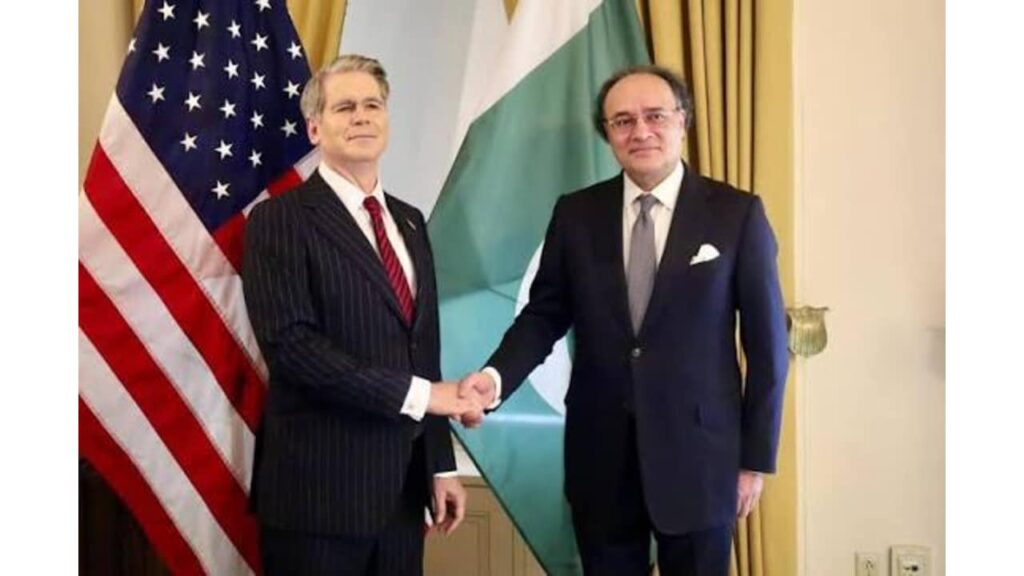
- Requested by: Pakistan’s Finance Minister Muhammad Aurangzeb, during a Washington meeting on Tuesday, July 21, 2026
- Confirmation status: Unconfirmed by either government reported by Reuters citing a source; US Treasury declined comment
- Stated purpose: Strengthen foreign exchange reserves, stabilize the rupee, reduce dependence on multilateral financing, and reinforce investor confidence
- Mechanism: Access to US dollar financing through the US Treasury’s Exchange Stabilization Fund (ESF) not a grant or aid package
- Rarity: Such facilities are uncommon; the last comparable arrangement was extended to Argentina in 2025, before that Uruguay in 2002 (Mexico separately holds a long-standing $9 billion swap line dating to the 1940s)
- Existing IMF context: Pakistan remains under a $7 billion IMF Extended Fund Facility requiring tax increases, spending restraint, and structural reforms
What Pakistan Is Reportedly Asking For
The specific mechanism at the center of this request is a Bilateral Exchange Stabilization Support Facility a form of financial support the US Treasury provides through its Exchange Stabilization Fund, designed to support a country’s foreign exchange reserves and help stabilize its currency through tools like dollar funding, swap arrangements, or guarantees. Reuters notes this is distinct from the US Federal Reserve’s standing dollar swap lines with major central banks, and importantly, is not a grant or aid package it would function as a financial backstop rather than direct assistance.
According to the report, Islamabad is seeking a facility worth $10 billion, with a maturity of up to five years, submitted directly to Treasury Secretary Scott Bessent during Finance Minister Aurangzeb’s Washington visit.
Why Pakistan Is Seeking This Now
Diplomatic timing. The request comes in the wake of Pakistan’s diplomatic role in facilitating talks related to the recent US-Iran conflict engagement that has raised Islamabad’s regional profile and fueled expectations that Pakistan could translate that diplomatic goodwill into stronger economic backing from Washington.
A reserves vulnerability exposed earlier this year. Pakistan’s foreign exchange position has remained heavily dependent on official financing, rollovers, and deposits from allies like China and Saudi Arabia a dependency that became visible in April 2026, when Pakistan repaid roughly $3.5 billion to the United Arab Emirates about one-fifth of its total reserves at the time with Saudi Arabia stepping in to provide $3 billion in fresh support to help cushion the impact.
Ongoing external risk factors. Credit rating agency Fitch has separately cautioned that rising energy costs and potential supply disruptions could sharply erode Pakistan’s foreign exchange reserves a concern that lines up with the broader Gulf security tensions currently affecting regional energy markets and shipping routes.
A still-fragile investment climate. Reuters notes that foreign investment in Pakistan has remained thin, held back by recurring external crises, policy uncertainty, security risks, past profit-repatriation restrictions, and a narrow export base factors that keep the country’s credit rating deep in speculative-grade territory and its borrowing costs elevated.
What Was Discussed in Washington
During the Tuesday meeting, Finance Minister Aurangzeb reportedly detailed Pakistan’s economic vulnerabilities stemming from regional geopolitical developments, and called for greater US support across several fronts: improving Pakistan’s access to international capital markets, increasing its foreign exchange reserves, and strengthening its sovereign credit profile. Both sides also reaffirmed a broader commitment to expanding bilateral economic cooperation, encouraging US investment in Pakistan, and advancing joint strategic projects.
This meeting is part of the same Washington visit during which Aurangzeb also discussed a proposed refinery modernization plan with Honeywell Technologies suggesting the visit as a whole is being used to pursue economic and investment deepening with the US across multiple tracks simultaneously.
Why a Deal Like This Would Be Significant
Analysts cited in regional reporting describe such an arrangement, if approved, as potentially representing one of the largest bilateral financial support arrangements the US has ever extended to Pakistan and a mechanism the US Treasury has used only rarely in recent decades. A $10 billion facility would, in theory:
- Meaningfully increase the State Bank of Pakistan’s reserve position, which SBP indicated in January could rise to near its 2021 record of roughly $20 billion by the end of 2026
- Strengthen confidence in the rupee’s stability
- Reduce Pakistan’s external borrowing costs
- Improve the country’s overall credit profile
- Provide a reassurance signal to foreign investors currently deterred by Pakistan’s ongoing macroeconomic uncertainty
Why This Matters
- It would mark a genuinely rare form of US financial engagement. Exchange Stabilization Fund arrangements of this kind have been used only a handful of times in recent decades Argentina in 2025 and Uruguay in 2002 being the closest precedents making any approval a notable departure from typical US-Pakistan financial engagement, which has historically run through multilateral channels like the IMF.
- It reflects a deliberate diversification strategy away from multilateral dependency. Seeking a bilateral US facility, rather than solely relying on IMF disbursements or continued rollovers from China and Saudi Arabia, suggests Pakistan is actively trying to broaden and de-risk its sources of external financial support.
- It’s tied to a specific geopolitical moment. The timing immediately following Pakistan’s diplomatic role in Iran-related talks suggests Islamabad may be attempting to convert recent diplomatic capital into tangible economic support, a dynamic worth watching regardless of whether this specific request is approved.
- It highlights a structural vulnerability that persists despite the IMF program. Even with a $7 billion IMF Extended Fund Facility already in place, Pakistan’s reserves remain exposed to bilateral financing timing (as seen in the UAE repayment episode) this request appears to be a direct response to that exposed vulnerability.
Frequently Asked Questions
What has Pakistan reportedly requested from the United States?
A $10 billion Bilateral Exchange Stabilization Support Facility, with a maturity of up to five years, according to Reuters sourcing not yet confirmed by either government.
Who made this request, and to whom?
Pakistan’s Finance Minister Muhammad Aurangzeb reportedly made the request to US Treasury Secretary Scott Bessent during a meeting in Washington on July 21, 2026.
What is a Bilateral Exchange Stabilization Support Facility?
A financial support mechanism provided through the US Treasury’s Exchange Stabilization Fund, designed to help a country’s foreign exchange reserves and stabilize its currency not a grant, aid package, or the same as the Federal Reserve’s central bank swap lines.
Has this request been confirmed or approved?
No. The US Treasury has declined to comment, and Pakistan’s Finance Ministry did not immediately respond to requests for comment. This is a reported request, not a confirmed arrangement.
Has the US extended a facility like this before?
Rarely. The most recent comparable arrangement was extended to Argentina in 2025, with Uruguay in 2002 before that; Mexico separately holds a long-standing $9 billion swap line dating back to the 1940s.
Why is Pakistan seeking this now?
Reported context includes Pakistan’s recent diplomatic role in facilitating talks related to the US-Iran conflict, a reserves vulnerability exposed in April 2026 when Pakistan repaid $3.5 billion to the UAE, and ongoing concerns about energy costs and regional instability affecting its foreign exchange position.
Does this replace Pakistan’s IMF program?
No. Pakistan remains under a separate $7 billion IMF Extended Fund Facility; this reported request would be an additional, bilateral arrangement rather than a replacement for its existing IMF commitments.