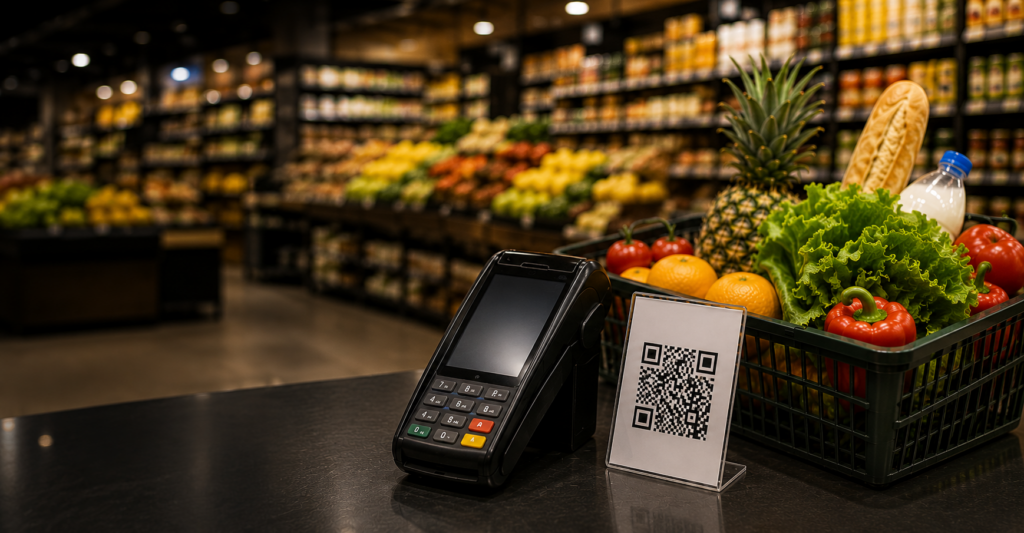
Pakistan’s shift away from cash has crossed another threshold. According to the State Bank of Pakistan’s (SBP) latest Payment Systems Quarterly Review for Q3 FY26 (January–March 2026), digital channels now account for 92% of all retail transactions processed through the formal banking and payment system — a milestone that confirms mobile-first, wallet-first payment behavior has become the default for most Pakistanis, not the exception.
Table of Contents
Key Takeaways:
- Reporting period: Q3 FY26 (January–March 2026)
- Total retail transactions: 3.7 billion, worth Rs168.8 trillion
- Digital share by volume: 92% (3.4 billion transactions)
- Digital share by value: ~40% (Rs68.3 trillion) large-value transactions still lean on branches and cheques
- Quarterly growth: +9% by volume, +1% by value versus Q2 FY26
- Mobile banking apps: 2.9 billion transactions 78% of all digital payments
- Raast (instant payment system): 742.1 million transactions worth Rs23.3 trillion
- Note: Cash transactions conducted entirely outside the banking system are not captured in this data
What the SBP Report Actually Shows
The quarterly review measures activity flowing through Pakistan’s formal banking and payments infrastructure it does not, and cannot, capture informal cash transactions that never touch a bank account. Within that formal system, though, the numbers show a clear and continuing trend: digital is no longer a growing segment of Pakistani payments, it’s the dominant one.
Retail transactions overall rose from 3.38 billion in the previous quarter to 3.70 billion, a 9% quarterly jump, while total value edged up more modestly from Rs167.2 trillion to Rs168.8 trillion. Nearly all of that volume growth came from digital channels, which climbed from 3.11 billion to 3.41 billion transactions over the same period.
Why 92% by Volume but Only ~40% by Value?
This is the detail most casual coverage misses, and it’s the one that actually explains how Pakistan’s payment system works. Digital channels dominate by count the huge number of small, everyday transactions like mobile top-ups, bill payments, and P2P transfers. But high-value transactions still move through branches: cheque transfers alone accounted for Rs70 trillion in value at bank branches during the quarter, alongside large pay orders, demand drafts, and cash-based branch activity.
In short: Pakistanis increasingly use digital channels for volume, but big-ticket money movement property, business settlements, large transfers still runs disproportionately through traditional branch infrastructure. That gap is a useful gauge of how much room digital payments still have to grow before they dominate value as well as volume.
Breakdown: Where the Digital Growth Is Coming From
Mobile banking apps and wallets remain the engine. Of the 3.4 billion digital transactions, 2.9 billion roughly 78% moved through mobile banking apps and e-money wallets offered by banks, branchless banking providers, and Electronic Money Institutions (EMIs), worth an estimated Rs41–42 trillion.
Raast is scaling fast. SBP’s instant payment system, Raast, processed 742.1 million transactions worth Rs23.3 trillion during the quarter:
- Person-to-Person (P2P) transfers grew 10% quarter-on-quarter to 664 million transactions worth Rs18.88 trillion
- Person-to-Merchant (P2M) payments nearly doubled, jumping from 36.3 million to 55.9 million transactions, with over 2.6 million merchants now onboarded
- QR-based merchant payments rose 41% by volume and 63% by value, reaching Rs0.5 trillion across 2.5 million registered QR-enabled merchant locations
Merchant infrastructure is expanding. POS terminals grew 38% year-on-year, from 179,383 to 247,836 machines, each processing an average of six transactions a day. E-commerce merchants grew even faster up 92% year-on-year to 17,554 with each averaging 280 transactions daily.
Wallets beat cards in e-commerce. Of 434.5 million online purchases made through account- and wallet-based channels (worth Rs0.47 trillion), card-based e-commerce transactions numbered just 16.4 million a small fraction. Interchange fees and a wallet-first banking culture appear to be steering Pakistan’s e-commerce growth down an account-to-account path rather than the card-centric model seen in more mature markets.
Physical banking hasn’t disappeared. Branch networks and agents still matter for high-value and cash-adjacent activity: 20,232 bank branches processed 127.9 million transactions worth Rs99.5 trillion, while roughly 819,000 branchless banking agents handled 154.7 million transactions worth Rs1.1 trillion.
Large-value settlement stayed robust. PRISM+, Pakistan’s real-time gross settlement system, processed 1.5 million transactions worth Rs389.8 trillion a 5.5% quarterly increase by value with government securities settlements accounting for 71% of that value.
Why This Milestone Matters
- It signals genuine behavior change, not just infrastructure growth. A 92% digital share means the average retail transaction in Pakistan’s formal financial system is now digital by default.
- Merchant-side acceptance is catching up to consumer-side adoption. P2M growth on Raast and the sharp rise in POS/e-commerce merchant counts show businesses, not just consumers, are driving the shift.
- It strengthens the case for continued digital-first policy. Rising digital adoption directly supports government initiatives including proposed frameworks like the National Data Governance Policy 2026 that assume citizens are increasingly interacting with financial and public services digitally.
- It’s a data point the fintech and banking sector will keep citing. Investors, regulators, and startups building payment products will use this 92% figure as the reference baseline until the next quarterly review resets it.
Benefits of This Digital Payments Shift
- Lower transaction friction for everyday retail and P2P payments through Raast and mobile apps
- Faster merchant settlement as QR and P2M infrastructure scales, reducing cash-handling costs for small businesses
- Greater financial traceability, supporting tax compliance and formal-economy documentation
- Expanded financial inclusion as branchless banking agents and mobile wallets extend formal financial access beyond traditional branch networks
- Reduced reliance on card infrastructure, letting Pakistan’s e-commerce ecosystem scale through lower-cost account-based rails
Challenges Still Ahead
- The value gap. With digital channels handling only ~40% of transaction value despite 92% of volume, large-value payments remain concentrated in slower, branch-based processes a bottleneck for full digitization.
- Cash outside the system is invisible to this data. The review explicitly excludes cash transactions conducted outside formal banking channels, meaning Pakistan’s true cash dependency is likely understated by looking at this figure alone.
- Card infrastructure lag. The heavy tilt toward account/wallet-based e-commerce over cards may limit interoperability with international card networks and cross-border commerce.
- Sustaining merchant onboarding momentum. Continued POS and e-commerce merchant growth depends on consistent incentives; a slowdown in onboarding could plateau the digital share before it converts into full value dominance.
- Cybersecurity and fraud risk. As transaction volume scales into the billions, the surface area for digital payment fraud and system resilience risk grows proportionally.
What to Watch Next
The next data point to watch is the Q4 FY26 Payment Systems Quarterly Review, covering April–June 2026, which will show whether the 92% volume share continues climbing and more importantly whether the value share starts closing the gap with volume. Continued P2M and QR growth on Raast will be the clearest early signal of whether merchant-side digital adoption is translating into genuine value migration away from branches and cheques.
Frequently Asked Questions
What percentage of Pakistan’s retail transactions are now digital?
92% by volume, according to the State Bank of Pakistan’s Payment Systems Quarterly Review for Q3 FY26 (January–March 2026).
How much money moved through Pakistan’s payment system in Q3 FY26?
3.7 billion retail transactions worth Rs168.8 trillion moved through formal banking and payment channels during the quarter.
Why is the digital share by value so much lower than by volume?
Because high-value transactions cheque transfers, large pay orders, demand drafts are still processed predominantly through bank branches, while digital channels handle the much higher number of smaller, everyday transactions.
What is Raast and how big is it now?
Raast is SBP’s instant payment system. It processed 742.1 million transactions worth Rs23.3 trillion in Q3 FY26, including 664 million P2P transfers and 55.9 million P2M merchant payments.
Does this data include cash transactions?
No. The SBP review only covers transactions processed through formal banking and payment channels; cash transactions conducted entirely outside the banking system are excluded.
Are Pakistanis using cards or wallets more for online shopping?
Wallets and account-based transfers dominate 434.5 million e-commerce transactions were account/wallet-based in Q3 FY26, compared to just 16.4 million card-based transactions.