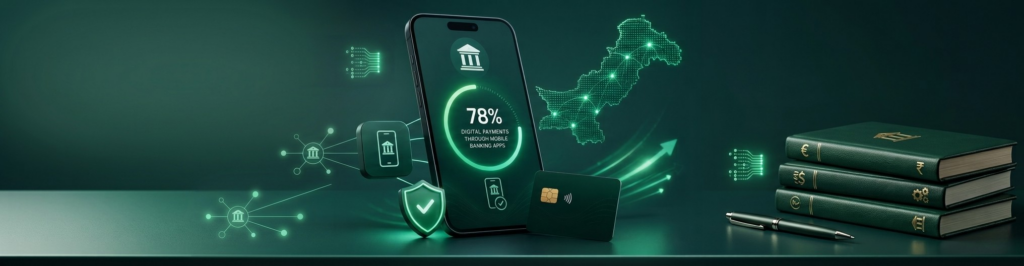
Mobile banking apps have become the default way Pakistanis pay digitally. According to the State Bank of Pakistan’s (SBP) Quarterly Payment Systems Review for January–March 2026, mobile banking apps, branchless banking platforms, and electronic money institutions (EMIs) together processed 2.9 billion transactions worth Rs42 trillion during the quarter representing 78% of all digital payments in the country.
Key Takeaways
- Reporting period: Q3 FY26 (January–March 2026)
- Mobile banking apps’ share of digital payments: 78%
- Transactions processed: 2.9 billion
- Value processed: Rs42 trillion
- Channels included: Mobile banking apps, branchless banking platforms, and electronic money institutions (EMIs)
- Other growth areas flagged in the report: Raast instant payments and internet banking both continued expanding
- Context: This mobile banking figure sits within SBP’s broader finding that digital channels overall handled 92% of Pakistan’s 3.7 billion retail transactions during the same quarter
What the SBP Report Shows
Mobile banking apps have moved decisively from a convenient alternative to the primary channel through which Pakistanis make digital payments. Of the roughly 3.4 billion digital transactions recorded across Pakistan’s formal payment system in Q3 FY26, 2.9 billion 78% ran through mobile banking apps, branchless banking platforms, and EMIs combined, worth Rs42 trillion.
That concentration is notable: it means more than three-quarters of every digital payment made in Pakistan during the quarter whether a bill payment, a P2P transfer, or a merchant purchase happened through a mobile app rather than internet banking, ATMs, POS terminals, or other digital channels.
Why Mobile Apps Are Pulling So Far Ahead
Smartphone-first banking habits. Mobile banking apps offer the lowest-friction path to digital payments for most users no need for a computer, physical card, or branch visit, just a smartphone already in hand for everyday tasks.
Branchless banking and EMI expansion. The 78% figure isn’t just traditional bank apps it bundles in branchless banking platforms and electronic money institutions, both of which have been expanding agent networks and onboarding new users at pace, extending mobile-based financial access to segments of the population that may not hold a traditional bank account.
Raast integration. SBP’s instant payment system, Raast, is increasingly accessed through mobile banking apps, meaning much of Raast’s own growth including rising P2P and person-to-merchant (P2M) transaction volumes is captured within this mobile banking channel figure rather than as a separate parallel trend.
Continued internet banking growth, but at a smaller scale. The report also noted continued growth in internet banking, but this channel remains a smaller share of the overall digital payments mix compared to mobile apps reinforcing that Pakistan’s digital payments growth is increasingly mobile-first rather than desktop or web-based.
A L S O R E A D:
https://www.bigspay.com/investpak-portal-pakistan-government-securities/
Why This Matters
- It confirms where Pakistan’s digital payments infrastructure investment should be concentrated. With mobile apps carrying 78% of digital payment volume, banks, EMIs, and fintechs building new payment products have a clear signal about where user attention and transaction activity already sit.
- It reflects genuine behavior change, not just channel availability. Mobile banking apps have been available for years; a 78% share this decisive shows adoption has now become deeply embedded in everyday financial habits, not just a growing option among several.
- It reinforces the case for continued Raast expansion. Since Raast transactions increasingly flow through mobile apps, sustained growth in instant payments and merchant-side QR adoption depends heavily on continued investment in mobile app performance, reliability, and merchant integration.
- It sits inside a broader digitization trend. This mobile banking dominance is one layer of a bigger picture: SBP’s same quarterly review found that digital channels overall processed 92% of Pakistan’s total retail transaction volume, meaning mobile banking apps are the largest single contributor to a broader cashless shift already underway.
Benefits of Mobile Banking’s Dominant Share
- Lower transaction costs for both consumers and financial institutions compared to branch-based or cash transactions
- Broader financial access through branchless banking and EMI platforms reaching users beyond traditional bank branch networks
- Faster, more convenient payments for everyday needs like bill payments, mobile top-ups, and person-to-person transfers
- Stronger foundation for continued Raast and merchant payment growth, since mobile apps are now the primary interface through which these newer payment rails reach users
- Better financial traceability, supporting broader documentation and formalization of everyday transactions
Frequently Asked Questions
What percentage of Pakistan’s digital payments go through mobile banking apps?
78%, according to the State Bank of Pakistan’s Quarterly Payment Systems Review for Q3 FY26 (January–March 2026).
How many transactions did mobile banking apps process in Q3 FY26?
2.9 billion transactions, worth a combined Rs42 trillion, across mobile banking apps, branchless banking platforms, and electronic money institutions.
Does this figure include Raast transactions?
Largely, yes. Raast is increasingly accessed through mobile banking apps, so much of its growth is captured within this mobile banking share rather than reported as an entirely separate channel.
How does this compare to overall digital payment adoption in Pakistan?
It sits within a broader trend: SBP’s same quarterly review found digital channels overall accounted for 92% of Pakistan’s 3.7 billion total retail transactions during the quarter.
Is internet banking growing too?
Yes, the SBP report noted continued growth in internet banking, though it remains a smaller share of Pakistan’s overall digital payments mix compared to mobile banking apps.