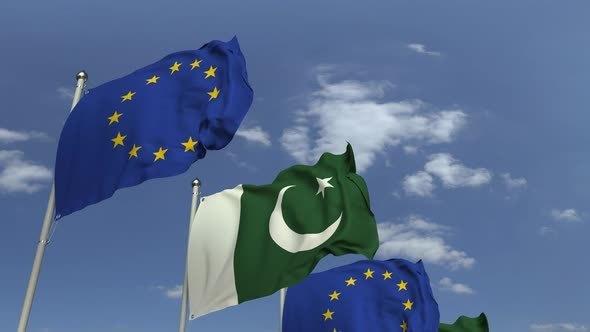
Pakistan will be required to submit a fresh application to retain preferential access to the European Union market under the revised Generalized Scheme of Preferences Plus (GSP+) regime.
Under the updated framework, Pakistan will have to commit to 32 international conventions, compared with 27 under the existing arrangement. The revised requirements are aimed at strengthening commitments related to human rights, labour rights, environmental protection and good governance.
The development is expected to have important implications for Pakistan’s exporters, particularly industries that rely heavily on access to European markets.
Table of Contents
Key Takeaways
- Pakistan must submit a fresh application under the revised EU GSP+ framework.
- The new regime requires commitments to 32 international conventions.
- The existing framework covers 27 conventions.
- The requirements include human rights, labour standards, environmental protection and governance.
- Continued preferential access will depend on compliance with the revised conditions.
What Is the EU GSP+ Scheme?
The EU’s Generalized Scheme of Preferences Plus is a trade arrangement that provides eligible developing countries with preferential access to the European market.
Under GSP+, qualifying countries receive zero or reduced tariffs on a wide range of products in exchange for commitments to implement international conventions covering sustainable development, human rights, labour rights, environmental protection and good governance.
For Pakistan, the scheme has been particularly important for export-oriented sectors such as:
- Textiles and garments
- Leather products
- Sports goods
- Surgical instruments
- Home textiles
- Other manufactured products
The preferential access helps Pakistani exporters remain competitive in the European Union by reducing the tariff burden on eligible goods.
Revised Framework Increases Compliance Requirements
The revised GSP+ framework increases the number of international conventions that participating countries must commit to from 27 to 32.
The expanded obligations are expected to strengthen the EU’s focus on broader standards related to:
- Human rights protection
- Labour rights and workplace standards
- Environmental sustainability
- Climate-related responsibilities
- Good governance
- Institutional accountability
- International legal commitments
Pakistan’s fresh application will therefore require a review of its existing commitments, policies and implementation mechanisms.
Impact on Pakistan’s Exports
The European Union is one of Pakistan’s most important export destinations. Preferential access under GSP+ has supported the growth of Pakistani exports by allowing several products to enter EU markets at lower or zero tariffs.
Any disruption in this access could increase costs for exporters and affect their competitiveness against suppliers from other countries.
The textile and apparel sector is likely to remain the most closely watched industry because of its significant contribution to Pakistan’s exports to European markets. However, other export sectors could also be affected if preferential treatment is not maintained.
Fresh Application Required
Under the revised regime, Pakistan will not simply continue under its existing arrangement automatically. It will be required to submit a fresh application demonstrating its willingness and ability to meet the updated conditions.
The application process may involve documentation, policy reviews and assessments of the country’s progress in implementing the required conventions.
Pakistan will need to demonstrate that its legal and institutional frameworks are aligned with the new requirements and that commitments are being implemented in practice.
Human Rights, Labour and Environmental Standards
The revised framework places greater emphasis on standards beyond traditional trade and tariff matters.
For Pakistan, this could mean increased attention to:
- Labour conditions in export industries
- Workplace safety
- Freedom of association and workers’ rights
- Environmental compliance in manufacturing
- Sustainable production practices
- Protection of fundamental rights
- Transparency and institutional governance
Meeting these requirements could require coordination among federal and provincial authorities, exporters, regulators, labour departments and industry associations.
Why GSP+ Is Important for Pakistan
The EU GSP+ arrangement has played a major role in supporting Pakistan’s export competitiveness and strengthening trade ties with Europe.
Maintaining the scheme can help Pakistan:
- Preserve market access for exporters
- Support textile and manufacturing industries
- Protect employment linked to exports
- Attract export-oriented investment
- Improve compliance with international standards
- Strengthen long-term economic relations with the EU
The scheme also encourages reforms that can improve Pakistan’s business environment and international reputation.
Challenges Ahead
Pakistan’s main challenge will be to meet the additional commitments while ensuring that compliance is not limited to formal ratification of conventions.
The European Union is expected to pay attention to implementation, monitoring and measurable progress. This means Pakistan may need to improve enforcement, reporting, institutional coordination and transparency.
Exporters may also face pressure to adopt more environmentally responsible production methods and stronger labour compliance systems to remain integrated into European supply chains.
Outlook
Pakistan’s fresh application under the revised GSP+ framework marks an important stage in its future trade relationship with the European Union.
The country will need to balance its export interests with stronger commitments to international conventions and sustainable development standards. Successful compliance could help preserve preferential access and support Pakistan’s long-term export growth.
However, failure to meet the revised requirements could create uncertainty for exporters and increase the cost of accessing the European market.
Frequently Asked Questions
What is the EU GSP+ scheme?
The EU GSP+ scheme provides eligible developing countries with zero or reduced-tariff access to European markets in exchange for commitments to international conventions.
Why must Pakistan submit a fresh application?
Pakistan will need to apply under the revised GSP+ framework because the new regime introduces updated eligibility and compliance requirements.
How many conventions will Pakistan need to commit to?
Pakistan will be required to commit to 32 international conventions, compared with 27 under the current framework.
Which areas are covered by the revised requirements?
The requirements cover human rights, labour standards, environmental protection, sustainable development and good governance.
Which Pakistani industries benefit from GSP+?
Major beneficiaries include textiles, garments, leather, sports goods, surgical instruments and other export-oriented manufacturing sectors.