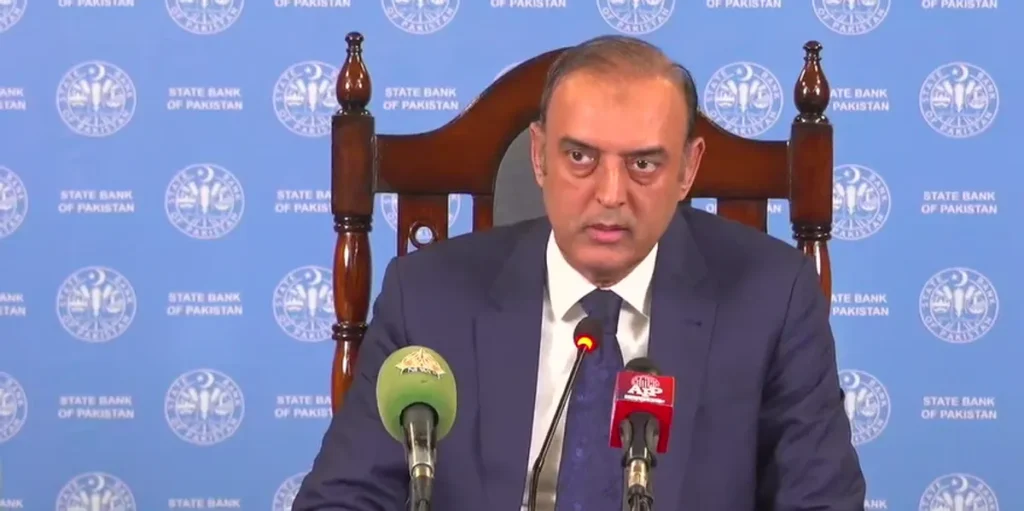
Pakistan’s external debt bill is about to get noticeably lighter. Speaking after the State Bank of Pakistan’s (SBP) latest monetary policy announcement, Governor Jameel Ahmad said the country’s external debt servicing is projected to decline to $21.5 billion in fiscal year 2026-27 down nearly $5 billion, or about 19%, from the $26.5 billion repaid in FY2025-26.
Table of Contents
Key Takeaways
- FY27 external debt servicing: $21.5 billion (down from $26.5 billion in FY26)
- Breakdown of the $21.5 billion: $18 billion in principal repayments, $3.5 billion in interest payments
- FY26 comparison: $26.5 billion in total debt servicing, including roughly $4 billion in interest payments
- Already addressed: Around $6.1 billion of the $21.5 billion FY27 obligation has already been repaid or secured through rollover arrangements as of late July 2026
- July 2026 alone: $4 billion in principal and $1.4 billion in interest already paid
- Reserves outlook: SBP-held reserves projected to reach an all-time high of $20.20 billion by end-December 2026, continuing to improve through the second half of FY27
- Where this was announced: SBP’s post-Monetary Policy Committee (MPC) press conference, July 27, 2026, in Karachi
What the Governor Actually Said
Speaking at a press conference following the announcement of SBP’s key policy rate decision for the next six weeks, Governor Jameel Ahmad said Pakistan’s external debt servicing for FY2026-27 is projected at $21.5 billion, a substantial decline from the $26.5 billion the country repaid, including rollovers, during FY2025-26. He broke the FY27 figure down into two components: $18 billion in principal repayments and $3.5 billion in interest payments the interest portion itself down from roughly $4 billion in interest paid the previous year.
Ahmad added an important real-time detail: of the full $21.5 billion due across FY27, around $6.1 billion has already been settled or secured through rollover arrangements as of late July 2026, with July’s repayments alone accounting for $4 billion in principal and $1.4 billion in interest meaning the country entered the new fiscal year already having addressed close to a third of its full annual external obligation in the very first month.
Why the Decline Matters
Ahmad framed the reduced FY27 servicing figure as the direct product of a prudent debt management strategy, rather than a one-off favorable circumstance. He noted that Pakistan successfully settled its entire FY26 external debt obligation, and despite those repayments, the central bank still managed to grow foreign exchange reserves by roughly $5 billion over the same year evidence, in his framing, that debt servicing and reserve accumulation have been running in parallel rather than trading off against each other.
He also pointed to a structural improvement behind the numbers: Pakistan’s public sector external debt has remained broadly steady at around $82 billion since 2023, but its composition has shifted meaningfully away from short-term commercial borrowing and toward longer-term debt, a change that reduces near-term refinancing pressure and rollover risk. Separately, he noted that banks’ outstanding foreign exchange liabilities have fallen sharply, from $5.8 billion in FY23 to just $950 million by the end of FY26, while SBP’s own forward liabilities narrowed by $5 billion during FY26, leaving only about $900 million left to settle in FY27.
Faster Reserve Growth Ahead
Beyond the debt servicing figures, Ahmad expressed confidence that Pakistan’s foreign exchange reserves will grow at a faster pace this year than in the previous one to two years. He said SBP-held reserves are projected to reach an all-time high of $20.20 billion by the end of December 2026, with continued improvement expected through the second half of FY27 (January–June 2026-27) even accounting for the country’s projected increase in imports as economic activity picks up.
This reserve-building effort has been underway for some time: Ahmad noted that SBP has purchased $27 billion from the local currency market since 2023, the primary mechanism behind reserves climbing from roughly $3 billion three years ago to well above $18 billion by the close of FY26 a sixfold increase achieved even as total external debt stayed roughly flat over the same period.
The Bigger Picture: Improving Inflows
Ahmad tied the improving external debt picture to a broader set of strengthening inflows expected in FY27. Workers’ remittances are projected to reach around $44 billion in FY27, up from the record $41.6 billion recorded in FY26 growth expected to continue even against the backdrop of the ongoing US-Iran conflict since late February 2026. He also pointed to expected growth in export earnings and continued inflows through the Roshan Digital Account (RDA) as additional supports for Pakistan’s external account over the coming year.
He acknowledged the current account deficit is expected to widen somewhat as domestic economic activity strengthens, but said it should remain contained within 0% to 1% of GDP during FY27 a modest deficit range that leaves room for continued reserve accumulation alongside debt servicing.
Why This Matters
- It substantially reduces near-term external financing pressure. A nearly $5 billion drop in annual debt servicing frees up foreign exchange that would otherwise be committed to repayments, giving SBP more room to build reserves rather than simply cycling incoming dollars back out to creditors.
- It reinforces the credibility case behind Pakistan’s recent S&P upgrade. Improved debt composition, declining bank FX liabilities, and a lighter servicing schedule are exactly the kind of structural indicators S&P cited when it upgraded Pakistan’s sovereign rating to ‘B’ just days before this briefing.
- It shows debt reduction and reserve building happening together, not as a trade-off. Ahmad’s own framing that FY26 reserves grew by $5 billion even while the full year’s debt obligations were fully settled is a materially different outcome than the debt-servicing-driven reserve drawdowns Pakistan experienced during its 2022-23 crisis period.
- It gives markets a concrete, checkable set of numbers to track through FY27. With specific monthly figures already disclosed for July, and a clear year-end reserve target of $20.2 billion, this is a rare case of Pakistani economic messaging providing genuinely falsifiable near-term benchmarks rather than only directional language.
Frequently Asked Questions
How much will Pakistan spend on external debt servicing in FY27?
$21.5 billion, according to SBP Governor Jameel Ahmad down from $26.5 billion in FY26.
What does the $21.5 billion figure include?
$18 billion in principal repayments and $3.5 billion in interest payments.
How much of this has already been paid or secured?
Around $6.1 billion as of late July 2026, including $4 billion in principal and $1.4 billion in interest paid in July alone.
Why is FY27’s debt servicing lower than FY26’s?
SBP has pursued a strategy of shifting from short-term commercial borrowing toward longer-term debt, along with reducing banks’ outstanding foreign exchange liabilities and SBP’s own forward liabilities, easing near-term repayment pressure.
What are Pakistan’s foreign exchange reserves expected to reach?
An all-time high of $20.20 billion (SBP-held) by the end of December 2026, with continued improvement expected through the first half of calendar year 2027.
How much are workers’ remittances expected to grow in FY27?
To around $44 billion, up from the record $41.6 billion recorded in FY26.
Is this connected to Pakistan’s recent credit rating upgrade?
Yes. The improving external debt servicing profile and reserve trajectory reinforce the same fiscal and external stability factors S&P Global Ratings cited when upgrading Pakistan’s sovereign credit rating to ‘B’.