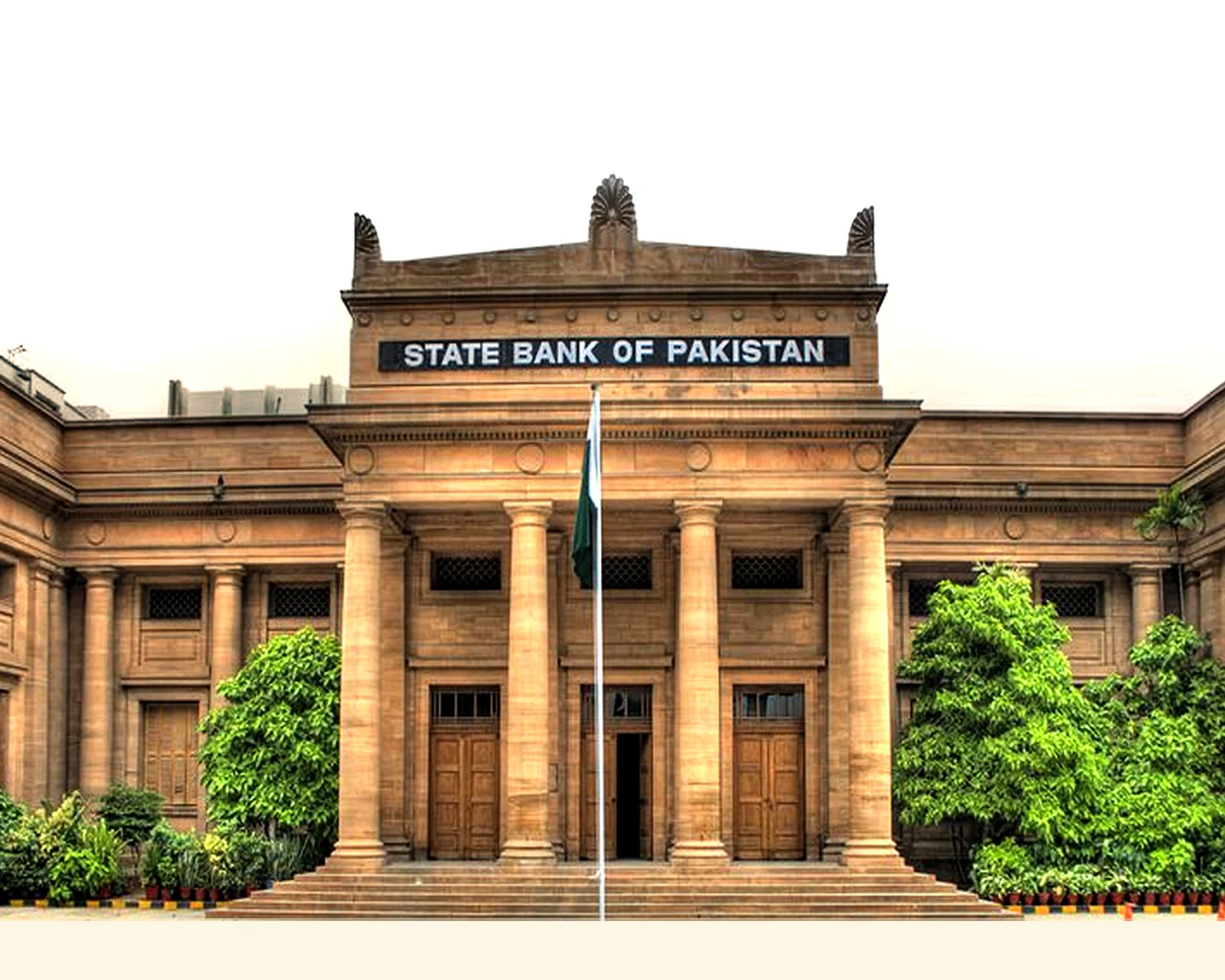

Pakistan’s flagship affordable housing scheme now has a firmer number attached to its next milestone. The State Bank of Pakistan (SBP) has confirmed that the federal government has allocated Rs71 billion in subsidies for the Prime Minister’s Apna Ghar Scheme in the FY2026-27 budget, with an official target of financing 150,000 homes by June 2027 even as SBP itself acknowledges the program has progressed more slowly than originally expected.
Table of Contents
Key Takeaways
- New target: 150,000 homes financed by June 2027
- FY2026-27 subsidy allocation: Rs71 billion
- Announced by: Ghulam Muhammad Abbasi, SBP Executive Director of the Islamic Finance Group
- Disbursed so far: Rs27 billion in housing loans since the scheme’s launch
- Program pace: SBP has explicitly acknowledged the scheme is progressing slower than expected
- Eligibility documents accepted: CNIC, NICOP, or Pakistan Origin Card (POC); salary slips for salaried applicants, or bank statements, electricity bills, and mobile top-up records for freelancers and informal-sector workers
- Processing terms: No processing fee; banks must decide on applications within 15 days; no prepayment penalty
- New infrastructure: An online application portal is now operational; a dedicated helpline is coming soon
- Broader program scale: Part of a Rs3.2 trillion, four-year plan targeting 500,000 total homes by FY2029
What SBP Actually Announced
At a media briefing on housing finance, Ghulam Muhammad Abbasi, SBP’s Executive Director of the Islamic Finance Group, confirmed that the federal government has set aside Rs71 billion in subsidies specifically for the Apna Ghar Scheme in the FY2026-27 budget, with an explicit target of financing 150,000 homes by the end of the fiscal year (June 2027).
Notably, Abbasi didn’t just present the target he was candid about the shortfall behind it, acknowledging that the scheme “has progressed more slowly than expected,” and that SBP and participating banks are now working specifically to speed up loan disbursements to have any realistic chance of meeting the target.
How the New Target Fits the Original Plan
This 150,000-home figure by June 2027 lines up with the program’s original phased rollout, rather than representing an entirely new number pulled from nowhere. When the Apna Ghar Scheme’s broader framework was finalized, the government laid out annual targets building toward its full 500,000-home, four-year goal: 50,000 units in FY26, 100,000 units in FY27, 150,000 units in FY28, and 200,000 units in FY29. Read cumulatively, 50,000 (FY26) plus 100,000 (FY27) adds up to exactly 150,000 homes by the end of FY27 suggesting this new SBP-confirmed figure represents the scheme’s cumulative delivery target through that point, rather than a standalone, revised annual number.
The Gap Between Approvals and Actual Disbursements
The numbers coming out of the scheme highlight a meaningful gap between how much financing has been approved versus how much has actually been disbursed to homeowners. Abbasi’s briefing put cumulative disbursed housing loans since the scheme’s launch at Rs27 billion a figure notably smaller than a recently reported Rs160 billion in approved loans across commercial banks cited elsewhere by government officials. Earlier figures from official program documents in June 2026 similarly showed 1,845 loans, worth roughly Rs5 billion, actually disbursed against Rs37 billion in approved financing at that point.
Read together, these figures point to a consistent pattern: the approval pipeline is moving faster than the actual disbursement pipeline, which is precisely the bottleneck SBP now says it is working with banks to address.
What Made the Scheme More Accessible
Alongside the target confirmation, SBP detailed several practical measures aimed at improving accessibility and speeding up the borrower experience:
Flexible eligibility documentation. Applicants can qualify using a CNIC, NICOP, or Pakistan Origin Card (POC). Salaried individuals can apply using salary slips, but notably freelancers and informal-sector workers can establish repayment capacity through alternative documentation, including bank statements, electricity bills, and mobile top-up records. This flexibility is particularly relevant given Pakistan’s freelance workforce recently posted record foreign exchange earnings of $1.76 billion, a segment that has historically struggled to access formal home financing due to a lack of conventional salary documentation.
No processing fee. SBP has directed participating banks not to charge any processing fee under the scheme.
A 15-day decision requirement. Banks are required to decide on loan applications within 15 days, reducing a common source of delay in traditional mortgage processes.
No prepayment penalty. Borrowers can repay their loans early without incurring any penalty a meaningful protection for borrowers whose financial circumstances improve during the loan term.
New digital infrastructure. An online application portal is now operational, with a dedicated helpline to be launched soon to assist applicants navigating the process.
Why This Matters
- It’s an honest acknowledgment of underperformance, not just a target announcement. SBP’s own admission that the scheme has moved slower than expected lends credibility to the announcement it reads as a course-correction attempt rather than pure promotional messaging.
- It specifically extends housing finance access to freelancers and informal workers, aligning with Pakistan’s broader 2026 push to formalize and support its rapidly growing freelance economy through more flexible financial documentation standards.
- It highlights a structural bottleneck common to large state-backed lending programs: approvals moving well ahead of actual disbursements, which is a useful, honest signal for tracking real progress rather than relying on approval totals alone.
- It connects to a broader, ongoing government housing finance effort, including the national Rs160 billion approved-loan milestone and individual bank-level progress reports, such as Meezan Bank’s own Rs2 billion disbursement under the same program.
Frequently Asked Questions
What is the new target for the Apna Ghar Scheme?
Financing 150,000 homes by June 2027, backed by Rs71 billion in subsidies allocated in the FY2026-27 federal budget.
How much has actually been disbursed under the scheme so far?
Rs27 billion in housing loans since the scheme’s launch, according to SBP’s July 2026 briefing.
Who is eligible to apply?
Holders of a CNIC, NICOP, or Pakistan Origin Card (POC). Salaried individuals can apply using salary slips, while freelancers and informal-sector workers can use bank statements, electricity bills, or mobile top-up records instead.
Are there any fees involved in applying?
No processing fee is charged, and banks are required to decide on applications within 15 days. Borrowers can also repay early without a prepayment penalty.
Has SBP acknowledged any issues with the scheme’s progress?
Yes. SBP’s Executive Director of the Islamic Finance Group, Ghulam Muhammad Abbasi, said the scheme has progressed more slowly than expected, and that SBP and banks are working to accelerate loan disbursements.
How does this 150,000 figure relate to the scheme’s overall 500,000-home target?
It aligns with the program’s original phased plan of 50,000 homes in FY26 and 100,000 in FY27, which together total 150,000 homes by the end of FY27 part of a broader four-year, Rs3.2 trillion plan targeting 500,000 homes by FY2029.
How can I apply for the Apna Ghar Scheme?
Through an online application portal that is now operational, with a dedicated helpline set to launch soon to assist applicants.