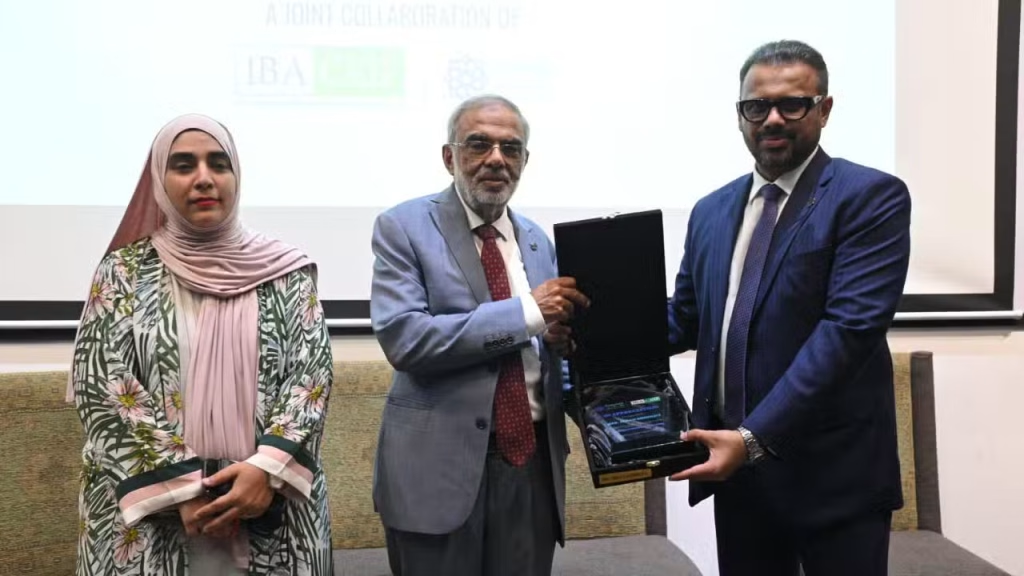
Pakistan’s Islamic finance industry is getting a new source of specialized talent as Raqami Islamic Digital Bank Limited (RIDBL) and the IBA Centre for Excellence in Islamic Finance (CEIF) join forces to launch a jointly branded Diploma in Islamic Digital Banking.
The programme brings together two rapidly developing areas of Pakistan’s financial sector: Islamic finance and digital banking.
By combining Shariah-compliant finance principles with the practical realities of technology-driven banking, the initiative aims to help professionals and aspiring bankers develop skills relevant to the changing financial services landscape.
Table of Contents
Key Takeaways
- Programme: Diploma in Islamic Digital Banking
- Institutions: Raqami Islamic Digital Bank Limited and IBA CEIF
- Focus: Islamic finance + digital banking
- Target audience: Banking professionals and aspiring bankers
- Key objective: Develop specialized Islamic digital banking skills
- Core theme: Shariah-compliant financial services in the digital era
Bridging Islamic Finance and Digital Banking
The financial sector is changing rapidly as customers increasingly access banking services through mobile applications, digital platforms and online payment systems.
At the same time, Islamic banking continues to expand its presence in Pakistan.
The new diploma addresses the intersection of these two trends by bringing Islamic finance education into the context of digital banking.
Participants will have the opportunity to understand how Shariah-compliant financial principles interact with modern technology and digital financial services.
Raqami and IBA CEIF Join Forces
The programme brings together the industry perspective of Raqami Islamic Digital Bank with the academic and professional expertise of IBA CEIF.
Raqami is focused on the development of digital Islamic banking services, while the IBA Centre for Excellence in Islamic Finance has an established role in Islamic finance education and professional development.
The partnership therefore connects academic learning with practical developments taking place in Pakistan’s digital banking sector.
What the Diploma Aims to Offer
The Diploma in Islamic Digital Banking is designed to provide participants with specialized knowledge alongside practical understanding of the digital transformation taking place in Islamic finance.
The programme is expected to address the relationship between:
- Islamic finance principles
- Digital banking models
- Shariah-compliant financial products
- Financial technology
- Digital customer experiences
- Technology-driven banking services
This combination can help learners understand both the foundations of Islamic finance and the technologies shaping modern banking.
Why Islamic Digital Banking Is Growing
Digital banking is changing how customers interact with financial institutions.
Mobile applications, digital onboarding, online payments and automated financial services are reducing the need for customers to visit traditional branches.
For Islamic banks, the challenge is to offer these conveniences while ensuring that products and processes remain consistent with applicable Shariah principles.
This creates demand for professionals who understand both financial technology and Islamic finance.
Building a New Talent Pipeline
The diploma could help create a stronger pipeline of professionals equipped for Pakistan’s evolving Islamic banking industry.
Traditional banking expertise alone may no longer be sufficient for roles involving digital financial products, fintech partnerships and technology-driven customer services.
Similarly, technology professionals working in financial services may need a stronger understanding of Islamic finance principles when developing products for Shariah-compliant institutions.
The programme aims to address this skills gap by bringing the two disciplines together.
Opportunities for Banking Professionals
Existing banking professionals could use the programme to strengthen their understanding of digital transformation within Islamic financial institutions.
The knowledge may be relevant to professionals working in areas such as:
- Islamic banking
- Digital banking
- Product development
- Fintech
- Compliance
- Shariah governance
- Financial technology
- Customer experience
The programme may also be relevant to professionals looking to transition into emerging roles within Islamic digital finance.
A Pathway for Aspiring Bankers
The initiative is not limited to experienced professionals.
Aspiring bankers and individuals interested in Islamic finance can also benefit from exposure to the technologies and business models shaping the sector.
Understanding both Islamic finance and digital banking can provide learners with a broader view of how modern financial institutions develop and deliver services.
Supporting Pakistan’s Digital Islamic Finance Ecosystem
Pakistan has a significant opportunity to expand digital financial services while maintaining a strong Shariah-compliant banking ecosystem.
Education and professional training are important components of this transition.
A specialized programme such as the Diploma in Islamic Digital Banking can help create professionals who understand the regulatory, financial, technological and Shariah considerations involved in digital Islamic finance.
Why the Programme Matters
The partnership comes at a time when financial institutions are investing heavily in digital channels and customers are becoming increasingly comfortable with technology-based banking.
For Pakistan’s Islamic finance industry, developing talent with both technological and Shariah expertise can support the design of financial products that are relevant to modern consumers.
The initiative also highlights the growing importance of collaboration between financial institutions and educational organizations in developing specialized banking skills.
Outlook
The launch of the Diploma in Islamic Digital Banking represents an effort to prepare Pakistan’s banking workforce for the intersection of Shariah-compliant finance and digital technology.
As digital banking continues to develop, professionals who can understand both areas may become increasingly important to financial institutions.
The collaboration between RIDBL and IBA CEIF could therefore contribute to building the specialized human capital needed for Pakistan’s evolving Islamic digital banking ecosystem.
Frequently Asked Questions
What is the Diploma in Islamic Digital Banking?
It is a jointly branded programme launched by Raqami Islamic Digital Bank Limited and IBA CEIF, focusing on the intersection of Islamic finance and digital banking.
Who is offering the programme?
The programme is being jointly offered by Raqami Islamic Digital Bank Limited (RIDBL) and the IBA Centre for Excellence in Islamic Finance (CEIF).
Who can benefit from the diploma?
The programme is designed for banking professionals, aspiring bankers and individuals interested in Islamic finance and digital banking.
Why combine Islamic finance with digital banking?
Digital banking is rapidly changing financial services, while Islamic finance has specific Shariah requirements. Combining the two areas can help professionals understand how Shariah-compliant services operate in a technology-driven environment.
What skills can participants develop?
Participants can develop knowledge related to Islamic finance, digital banking, fintech, Shariah-compliant financial services and the broader digital transformation of banking.
Why is Islamic digital banking important for Pakistan?
The combination of growing digital financial services and Islamic banking creates demand for professionals who understand both technology-driven banking and Shariah-compliant finance.