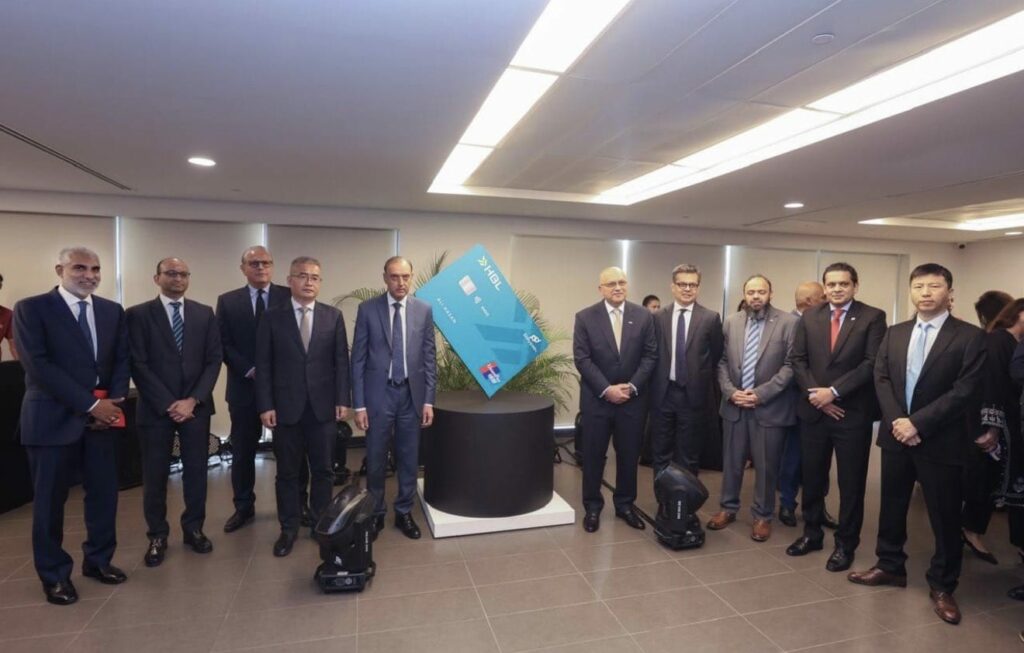
One card, two payment networks, and full coverage from a corner store in Lahore to a shop in Shanghai. HBL, Pakistan’s largest issuer of debit cards, has launched the HBL PayPak UnionPay Co-Badge Debit Card at a ceremony held at HBL Tower, Karachi combining Pakistan’s domestic payment scheme with a globally accepted international network on a single piece of plastic.
Table of Contents
Key Takeaways
- What launched: HBL PayPak UnionPay Co-Badge Debit Card
- Developed with: 1LINK-operated PayPak (Pakistan’s first domestic payment scheme) and UnionPay International (UPI)
- Launch location: HBL Tower, Karachi
- Card design: Dual-interface, featuring both networks on a single card
- What it enables: Secure transactions domestically via PayPak and internationally via UnionPay’s global acceptance network
- HBL’s track record: Pioneer partner of PayPak; one of the largest PayPak issuers and acquirers in Pakistan; has issued UnionPay debit cards since 2013
- Attendees at launch: Jameel Ahmad (Governor, SBP), Muhammad Nassir Salim (President & CEO, HBL), Li Yong (Commercial Counsellor, People’s Republic of China), Aamir Kureshi (GM, President’s Office and Strategic Initiatives, HBL), Nadeem Haroon (Country Head, UnionPay International), and Najeeb Agrawalla (CEO, 1LINK)
What the Co-Badge Card Actually Does
A co-badge card carries two separate payment networks on one physical card, rather than forcing a customer to choose between domestic and international acceptance. With the HBL PayPak UnionPay card, PayPak handles transactions within Pakistan, while UnionPay International’s global network takes over for transactions abroad letting a single card serve as both a everyday domestic payment tool and a fully functional international card for travel, online purchases, and cross-border spending.
This dual-interface design means customers don’t need to carry a separate international card just for travel or foreign transactions, while still benefiting from PayPak’s domestic-first, lower-cost processing for day-to-day spending inside Pakistan.
A L S O R E A D:
Mastercard and BOP Expand Strategic Collaboration to Support Pakistan’s Cashless Economy
Why HBL Is Positioned to Lead This Launch
HBL isn’t new to either side of this partnership. The bank has been the pioneer partner of PayPak since its inception and remains one of the largest issuers and acquirers of PayPak cards in the country. On the international side, HBL has been issuing UnionPay debit cards since 2013, giving it more than a decade of operating experience with the network this co-badge card now builds on.
HBL’s relationship with China extends well beyond payment cards. The bank is the only Pakistani bank with branches in both Beijing and Urumqi, and has played a role in several notable China-linked financial milestones — including facilitating Pakistan’s inaugural Panda Bond issuance and being nominated to chair the Council of the Interbank Consortium of the Shanghai Cooperation Organisation (SCO IBC) for 2026–2027. The co-badge card launch extends that existing financial connectivity between Pakistan and China into a mainstream consumer payments product.
What SBP’s Governor Said
Jameel Ahmad, Governor of the State Bank of Pakistan, welcomed the launch, describing the co-badge partnership as an important milestone in Pakistan’s move toward a modern, resilient, and inclusive digital payments ecosystem that supports the Prime Minister’s Cashless Pakistan vision. He noted that the solution combines the strength of Pakistan’s domestic payment infrastructure with the international acceptance of a global payment network.
The Governor also emphasized that Pakistan’s domestic payment network should remain central to the country’s digital economy, positioning PayPak as the preferred platform for domestic debit card issuance, while framing this specific initiative as aligned with SBP’s Vision 2028 strategy.
Why This Matters
- It strengthens PayPak’s value proposition. By pairing PayPak with a globally recognized network rather than positioning it purely as a domestic-only scheme, the co-badge model addresses one of the practical limitations that has historically pushed Pakistani customers toward international card networks for any cross-border need.
- It deepens Pakistan-China financial ties through everyday consumer banking. Beyond high-level financial cooperation like the Panda Bond and SCO chairmanship, this card brings that relationship into a product ordinary retail banking customers will actually use.
- It reflects SBP’s broader domestic payment infrastructure strategy. The Governor’s framing PayPak as the “preferred platform” for domestic issuance signals continued regulatory emphasis on strengthening homegrown payment rails alongside, rather than instead of, international network partnerships.
- It fits into a broader wave of 2026 Pakistani payments innovation. This launch follows closely behind other major digital payments milestones this year, including record digital transaction volumes reported by SBP and continued growth in QR-based merchant payments part of a consistent push toward a more interoperable, cash-lite financial ecosystem.
Benefits of the Co-Badge Card for Customers
- One card for both domestic and international spending, removing the need to carry separate cards for travel versus everyday use
- Broader ATM and POS access, combining PayPak’s local acceptance with UnionPay’s international network reach
- Continuity for existing HBL customers, given HBL’s long operating history with both PayPak and UnionPay
- Alignment with national digital payments goals, supporting SBP’s cash-lite economy objectives at the individual card level
- Stronger security profile, benefiting from the established infrastructure and standards of two established payment networks rather than one
Frequently Asked Questions
What is the HBL PayPak UnionPay Co-Badge Debit Card?
A dual-interface debit card combining Pakistan’s domestic PayPak payment scheme with UnionPay International’s global payment network on a single card.
Who developed this card?
HBL, in partnership with 1LINK-operated PayPak and UnionPay International (UPI).
How does the co-badge feature work?
The card carries two separate payment networks PayPak for domestic transactions within Pakistan, and UnionPay for international transactions abroad.
Has HBL worked with these networks before?
Yes. HBL is the pioneer partner of PayPak and one of its largest issuers, and has issued UnionPay debit cards since 2013.
Where was the card launched?
At a ceremony held at HBL Tower, Karachi.
Who attended the launch ceremony?
Industry leaders including SBP Governor Jameel Ahmad, HBL President & CEO Muhammad Nassir Salim, China’s Commercial Counsellor Li Yong, and representatives from UnionPay International and 1LINK.
How does this fit into Pakistan’s broader digital payments strategy?
SBP has positioned it as aligned with its Vision 2028 strategy and the Prime Minister’s Cashless Pakistan programme, reinforcing PayPak’s role as the country’s preferred domestic card issuance platform.