
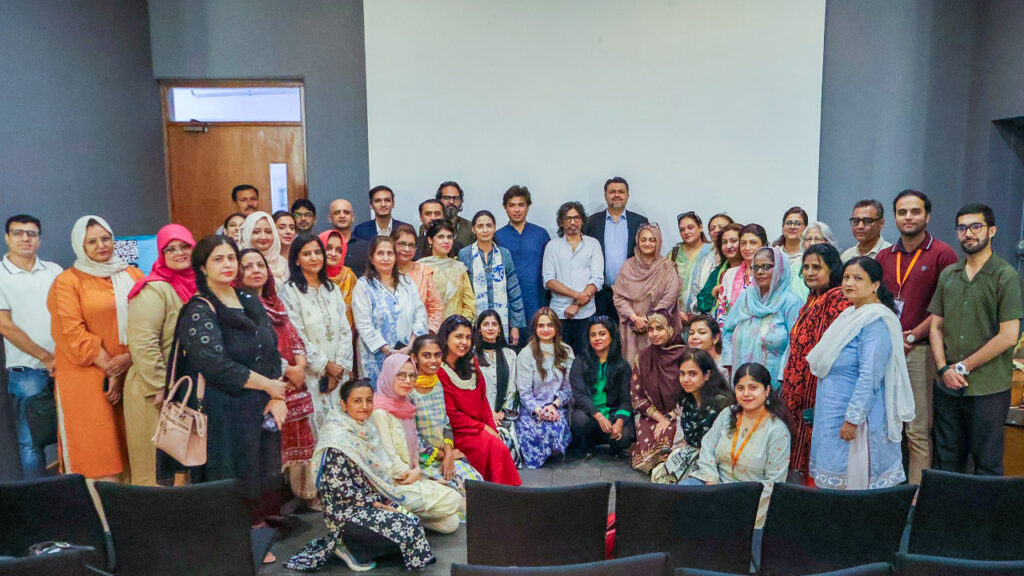
A new education initiative is bringing health awareness and financial literacy closer to Pakistani families, with schools serving as a platform for learning that extends beyond the classroom.
Bank Alfalah, in partnership with the Association for Mothers and Newborns (AMAN), Zindagi Trust and Kiran Foundation, has supported the launch of the School-Based Family Learning Initiative.
The 12-month programme aims to equip mothers, caregivers and students with practical knowledge about healthcare, family wellbeing and financial literacy, helping families make more informed decisions in their everyday lives.
Table of Contents
Key Takeaways
- Programme: School-Based Family Learning Initiative
- Duration: 12 months
- Lead financial-sector partner: Bank Alfalah
- Partner organizations: AMAN, Zindagi Trust and Kiran Foundation
- Target groups: Mothers, caregivers and students
- Key areas: Health awareness, family wellbeing and financial literacy
- Main objective: Practical knowledge for better household decision-making
Bringing Family Learning Into Schools
The initiative takes a broader approach to education by connecting what students learn at school with the needs of their families at home.
Instead of focusing solely on academic subjects, the programme introduces practical knowledge that can influence everyday decisions related to health, household finances and family wellbeing.
The involvement of mothers and caregivers is particularly important because many household decisions related to healthcare, education and money management are made at the family level.
Health Awareness for Families
Healthcare knowledge can play an important role in helping families recognize risks, make informed choices and seek appropriate support when needed.
Through the programme, participating families are expected to gain practical awareness around health and wellbeing.
By connecting health education with schools, the initiative can create a learning environment where students and caregivers can share knowledge and apply it in their daily lives.
Financial Literacy at an Early Stage
Financial literacy is another central component of the programme.
Understanding basic financial concepts can help individuals make more informed decisions about spending, saving, budgeting and managing household resources.
Introducing these concepts through schools can also help students develop financial awareness at an early stage, while giving parents and caregivers practical knowledge that can be applied at home.
Mothers and Caregivers at the Center
The programme specifically includes mothers and caregivers, recognizing their important role in household decision-making.
Providing caregivers with practical information can potentially extend the impact of school-based learning beyond students.
A child who learns about healthy habits or basic money management at school can take that knowledge home, while parents can reinforce those lessons through everyday family practices.
Role of Bank Alfalah
Bank Alfalah’s participation reflects the banking sector’s wider role in supporting financial literacy and community development.
As a financial institution, the bank can contribute expertise around financial awareness while working alongside organizations with experience in education, health and community-focused programmes.
The partnership brings together financial-sector resources and social-development expertise under one initiative.
Collaboration With Social Organizations
The initiative is being supported in partnership with three organizations:
- Association for Mothers and Newborns (AMAN)
- Zindagi Trust
- Kiran Foundation
Each organization brings experience in areas connected to family welfare, education and community development.
The collaboration reflects an integrated approach in which health, education and financial knowledge are treated as interconnected parts of family wellbeing.
Why Financial Literacy Matters
For many families, everyday financial decisions can have long-term consequences.
Basic financial knowledge can help people better understand:
- Household budgeting
- Saving and spending
- Financial planning
- Responsible use of financial services
- Education-related expenses
- Emergency financial needs
Building these skills can help families approach financial decisions with greater awareness.
Why School-Based Learning Can Make a Difference
Schools provide a practical setting for reaching both students and the wider family environment.
When educational programmes involve caregivers alongside students, lessons can potentially move from the classroom into the home.
This creates an opportunity to turn theoretical knowledge into everyday practices, whether that means adopting healthier habits or becoming more organized about household finances.
A 12-Month Programme
The School-Based Family Learning Initiative will run for 12 months, giving participating organizations time to develop and deliver learning activities while assessing how families respond to the programme.
The longer programme period can also provide an opportunity to refine educational approaches based on feedback from students, parents and caregivers.
Broader Impact on Communities
The initiative reflects a growing understanding that education can extend beyond traditional academic learning.
Health awareness and financial literacy are practical life skills that can influence household wellbeing, children’s development and economic decision-making.
By bringing these subjects into schools and homes, the programme aims to create benefits that extend beyond individual students to the wider family and community.
Outlook
The School-Based Family Learning Initiative represents a collaborative effort to connect education with two important areas of everyday life: health and financial decision-making.
With Bank Alfalah working alongside AMAN, Zindagi Trust and Kiran Foundation, the 12-month programme aims to give students, mothers and caregivers practical knowledge they can use beyond the classroom.
Its longer-term impact will depend on participation, quality of implementation and how effectively families apply the knowledge in their daily lives.
Frequently Asked Questions
What is the School-Based Family Learning Initiative?
It is a 12-month education programme designed to provide students, mothers and caregivers with practical knowledge about healthcare, family wellbeing and financial literacy.
Who is supporting the initiative?
Bank Alfalah is supporting the initiative in partnership with AMAN, Zindagi Trust and Kiran Foundation.
How long will the programme run?
The programme is planned for 12 months.
Who will benefit from the programme?
The initiative targets students, mothers and caregivers, with the aim of extending learning from schools into homes.
What topics will be covered?
The programme focuses on health awareness, family wellbeing and financial literacy.
Why is financial literacy included in a school-based programme?
Financial literacy provides practical skills that can help students and families make more informed decisions about saving, spending and managing household finances.