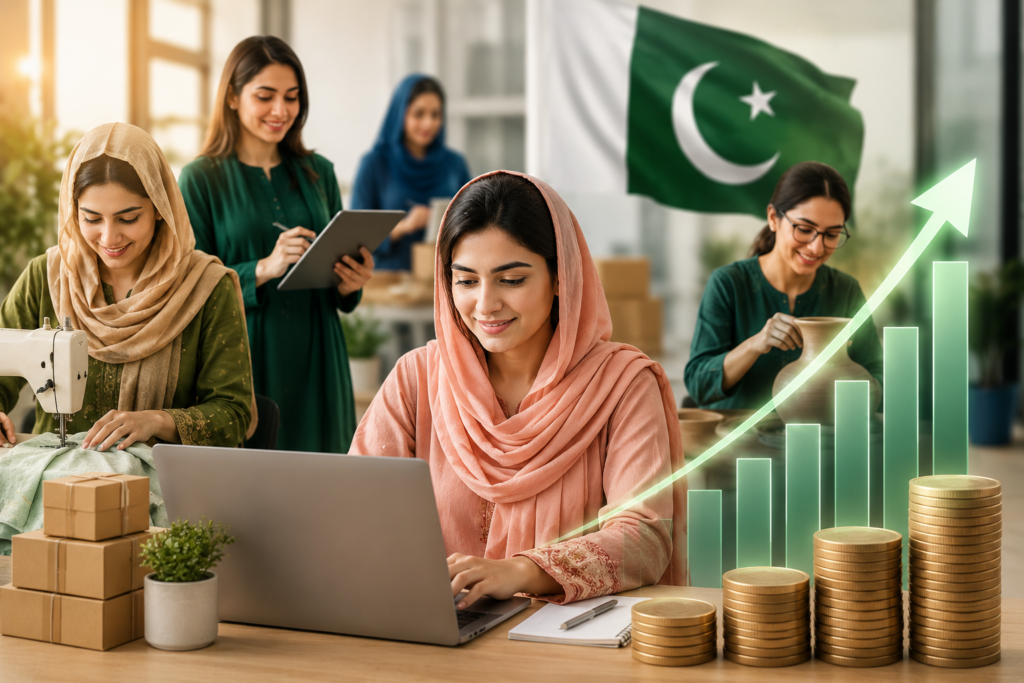
More than 104,000 young women entrepreneurs in Pakistan have secured a combined Rs. 29 billion in financing through the Prime Minister’s Youth Business and Agriculture Loan Scheme.
The financing highlights continued efforts to improve women’s access to formal financial services and business capital, providing financial support to female entrepreneurs across the country.
The program’s reach among young women also reflects growing participation of women in Pakistan’s entrepreneurial and small-business landscape.
Table of Contents
Key Takeaways
- Women beneficiaries: 104,000+
- Total financing: Rs. 29 billion
- Program: Prime Minister’s Youth Business and Agriculture Loan Scheme
- Target group: Young entrepreneurs
- Focus: Women-led businesses and entrepreneurship
- Key objective: Improve access to formal business financing
- Country: Pakistan
More Than 104,000 Women Receive Financing
The Youth Business and Agriculture Loan Scheme has provided financing to more than 104,000 young women.
With a combined financing amount of Rs. 29 billion, the initiative is providing capital to female entrepreneurs looking to establish, operate or expand their businesses.
Access to financing remains an important factor for entrepreneurs, particularly those who may face difficulty obtaining funding through conventional financial channels.
Financing Supports Female Entrepreneurship
The availability of business financing can help entrepreneurs invest in areas such as business expansion, equipment, working capital and new ventures.
For women entrepreneurs, greater access to formal financial services can also help bring more female-led businesses into the mainstream financial system.
The latest figures demonstrate the scale at which women are participating in the country’s youth financing initiatives.
Financial Inclusion for Women
The financing represents a broader effort to improve financial inclusion among women in Pakistan.
Greater access to formal banking and credit can provide women with more opportunities to establish sustainable businesses and participate in economic activity.
Programs targeting young entrepreneurs can therefore play a role in widening access to capital beyond established business owners.
Supporting Pakistan’s Entrepreneurial Economy
Female-led enterprises form an important part of Pakistan’s small-business and entrepreneurial ecosystem.
Providing young women with access to financing can support the creation and expansion of businesses while encouraging greater participation in the formal economy.
The Rs. 29 billion provided under the scheme represents a significant pool of capital directed toward young women entrepreneurs.
Why This Matters
- More than 104,000 young women have received financing.
- The beneficiaries have secured a combined Rs. 29 billion.
- Financing is being provided under the Prime Minister’s Youth Business and Agriculture Loan Scheme.
- The initiative supports greater women’s financial inclusion.
- Access to capital can help female entrepreneurs establish and expand businesses.
- The program highlights the growing role of women in Pakistan’s entrepreneurial economy.
Frequently Asked Questions
How many women have benefited from the Youth Business and Agriculture Loan Scheme?
More than 104,000 young women entrepreneurs have secured financing through the scheme.
How much financing have women received?
Young women have received a combined Rs. 29 billion in financing.
Which program is providing the financing?
The financing is being provided under the Prime Minister’s Youth Business and Agriculture Loan Scheme.
How does the scheme support women entrepreneurs?
The program provides access to business financing, helping young women obtain capital for their entrepreneurial activities.
Why is financing important for women entrepreneurs?
Access to formal financing can help women start, operate and expand businesses while increasing their participation in the formal financial system.
What does the development mean for financial inclusion in Pakistan?
The scale of financing indicates continued efforts to bring more women into formal financial services and business financing, supporting broader economic participation.