
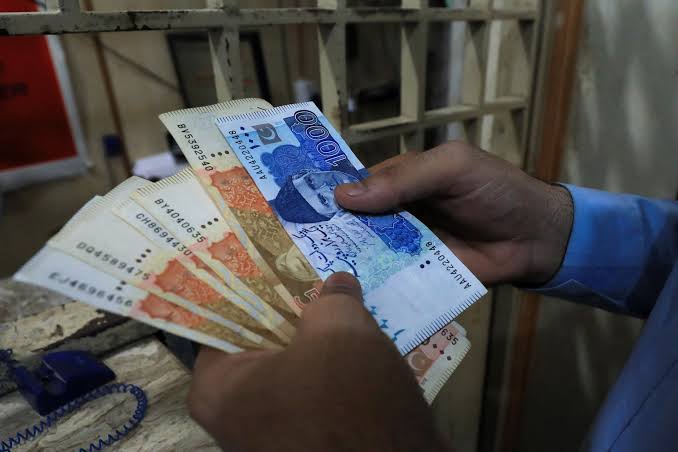
Pakistan’s broad money supply (M2) declined by 6% during the opening weeks of fiscal year 2027, according to data from the State Bank of Pakistan (SBP).
The contraction points to a slowdown in the expansion of money circulating through the economy, with the banking system recording weaker growth across both its domestic and foreign assets.
The development provides an early indication of how monetary conditions are evolving at the beginning of FY2027.
Table of Contents
Key Takeaways
- Indicator: Broad Money Supply (M2)
- Change: 6% contraction
- Period: Early weeks of FY2027
- Data Source: State Bank of Pakistan
- Main Factors: Weaker growth in domestic and foreign banking-system assets
- Economic Signal: Slower monetary expansion
M2 Declines at the Beginning of FY2027
Pakistan’s broad money supply recorded a 6% decline during the initial weeks of FY2027.
M2 is a broad measure of money available within an economy and includes currency and various forms of bank deposits. Changes in the measure can provide insight into the pace at which liquidity is expanding or contracting.
The latest movement indicates that monetary expansion started FY2027 on a weaker footing.
Banking System Assets Show Slower Growth
The decline in M2 was associated with weaker growth in both domestic and foreign assets held by the banking system.
Domestic assets reflect the banking system’s financial exposure within Pakistan, while foreign assets capture its position involving external assets.
When growth across these components slows, the expansion of the overall money supply can also lose momentum.
What a Decline in M2 Means
A contraction in broad money does not necessarily mean that economic activity is declining. However, it is an important monetary indicator that can help explain changes in liquidity and financial conditions.
A slower increase—or temporary contraction—in money supply may affect the availability and flow of funds through the banking system.
For policymakers, businesses, and investors, M2 trends are therefore useful for monitoring the direction of monetary conditions alongside other indicators such as credit growth, inflation, interest rates, and economic activity.
Early Signal for FY2027 Monetary Conditions
The 6% decline provides an early snapshot of Pakistan’s monetary environment at the start of FY2027.
Whether the contraction persists or reverses in subsequent weeks will depend on developments in banking assets, credit activity, foreign exchange flows, government financing, and broader economic conditions.
Future SBP data will therefore be important in determining whether the latest decline represents a short-term movement or a broader shift in monetary expansion.
Why This Matters
- Pakistan’s M2 money supply contracted 6% in the early weeks of FY2027.
- The movement indicates slower monetary expansion at the start of the new fiscal year.
- Both domestic and foreign banking-system assets recorded weaker growth.
- M2 trends provide an important measure of liquidity and monetary conditions.
- Further SBP data will show whether the contraction is temporary or part of a longer trend.
Frequently Asked Questions
What happened to Pakistan’s money supply in early FY2027?
Pakistan’s broad money supply, measured by M2, declined by 6% during the opening weeks of FY2027.
What is M2?
M2 is a broad measure of the money supply that captures currency and various types of bank deposits circulating within the economy.
Why did M2 decline?
The decline was linked to weaker growth in both domestic and foreign assets of Pakistan’s banking system.
What does falling M2 indicate?
A decline in M2 can signal slower monetary expansion and changing liquidity conditions within the economy, although it does not by itself indicate that economic activity is contracting.
Who provides Pakistan’s M2 data?
The State Bank of Pakistan (SBP) publishes monetary and banking-system data used to track changes in Pakistan’s broad money supply.
Is the 6% decline likely to continue?
It is too early to determine. Subsequent SBP data will show whether the early FY2027 contraction is temporary or develops into a broader monetary trend.